

Many people wonder if certain months of the year are better for commercial real estate than others. Is commercial real estate like Christmas lights where it’s best to wait until after the busy season to stock up for next year? Are there tax considerations that have property owners scrambling to sell buildings for basement prices? We’re going to discuss all this and more in today’s article.
To start, this discount line of thinking makes sense. Business sometimes feels slower around the New Year. Executives are taking vacations and consumer habits taper off, at least compared to the peak holiday season. But just because an idea “makes sense” doesn’t make it true.
When it comes to purchasing commercial real estate in January (or any month for that matter), we shouldn’t try to time the market. Like buying and selling stocks, we need to consider data as well as your unique situation. Saving a few thousand dollars isn’t worth delaying your business plan by seven months.
If you are looking for commercial real estate in the Mid-Ohio Valley, we recommend you speak with our dedicated real estate services team. We can help you consider all angles and find the perfect space for business or investment.
What Does the Data Say About Buying Commercial Real Estate in January?
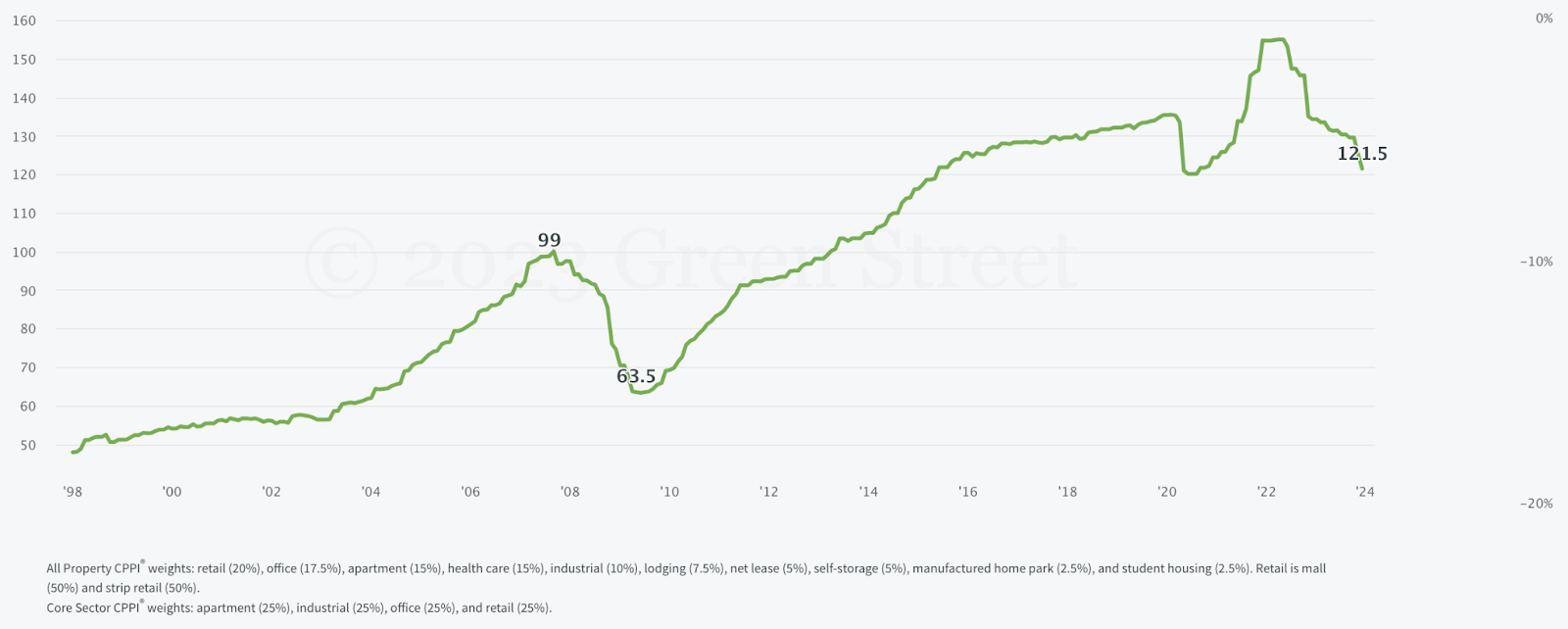
In general, January is not better than any other month to purchase commercial real estate. Over the past two decades, prices have generally trended upward, averaging around a 5% gain year-over-year. While Q1 sometimes saw a dip in prices, there’s not enough of a trend to support the thinking that January is the best month to buy commercial real estate.
The chart below shows the Green Street Commercial Property Price Index®. Other studies, such as those completed by the IMF, support the data in this index. Despite major economic disruptions like the Great Recession and the COVID pandemic paired with historic rate hikes, commercial real estate has seen steady growth over time. While specific regions may have different trends, it’s hard to argue that someone should purchase real estate based on the month alone.
Credit: https://www.greenstreet.com/insights/CPPI
What to Consider When Buying Commercial Real Estate
Since timing your real estate purchase based on the month of the year isn’t recommended, what else should you consider when looking at commercial properties? Here are a few things to keep in mind.
1. Location
First and foremost, the location of the property is of paramount importance. The property’s location can significantly impact its overall value and potential for rental income. Factors such as accessibility to major transportation routes, demographics of the surrounding population, zoning regulations, competition in the area, and the overall economic stability of the region should all be considered when evaluating a property’s location.
2. Business Profitability
Next, it’s essential to assess the profitability of the businesses that occupy the commercial space. The success and financial health of these tenants directly affects the income generated by the property. It’s crucial to examine tenant quality, lease terms, market demand for the type of property in question, tenant mix, and any potential opportunities for increasing rental income or property value. Waiting to purchase a property during a specific month could lead to lost revenue.
3. Industry Trends
Staying informed about industry-specific trends is essential. Emerging technologies, the influence of e-commerce on retail properties, sustainability considerations, the impact of remote work on office space demand, and demographic factors like the aging population can all influence the demand for various types of commercial real estate. Being aware of these trends can help investors make informed decisions.
4. Macroeconomic Trends
Investors should pay attention to broader macroeconomic trends that can affect the commercial real estate market. Interest rates, inflation, market cycles, tax incentives, and financing options can all impact the overall attractiveness of commercial real estate investments. For instance, low interest rates may make financing more affordable and, thus, increase the appeal of commercial real estate investments.
5. Physical Condition of Property
The physical condition and potential for improvement of the property itself should not be overlooked. Conducting a thorough property inspection is essential to identify any existing issues or necessary repairs. Investors should also consider ongoing maintenance costs, potential renovation opportunities, and any environmental concerns associated with the property.
Every business owner and investor wants the best deal on commercial real estate, but trying to time the market might not be in your best interest. Historically, property prices rise as long as there isn’t an issue with the property or location itself. Of course, it’s always recommended to speak with an experienced broker to get a clear picture of your unique situation.
No matter what time of year, the PM Company is here to help you make the wisest commercial real estate investments in the Mid-Ohio Valley region.
